
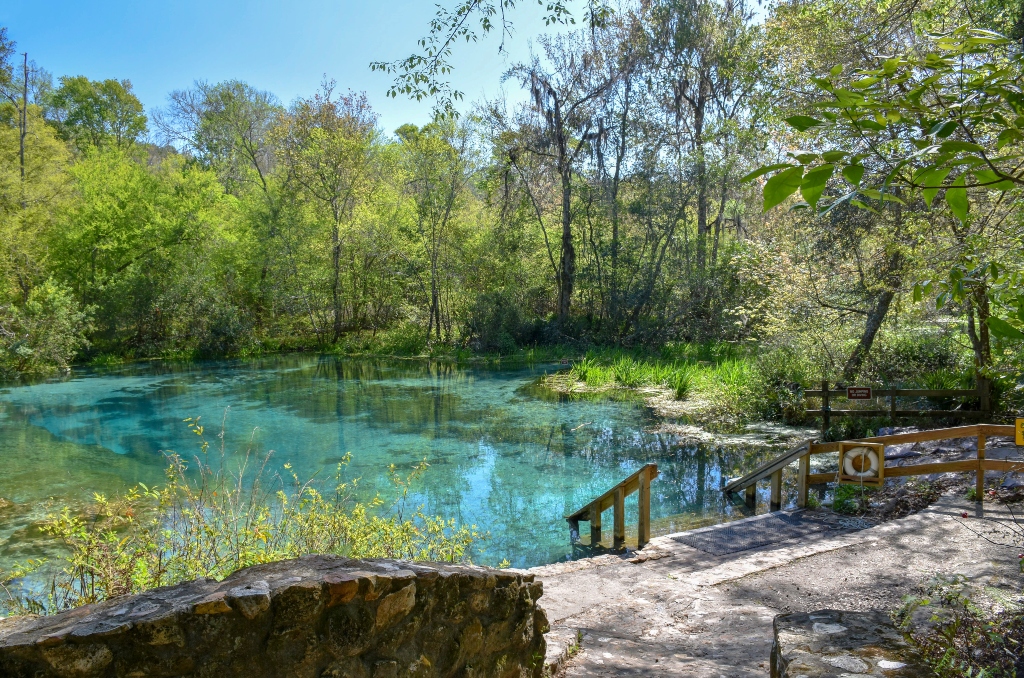
Florida State Parks – Pictured: Located in Florida, Ichetucknee Springs State Park – Courtesy: Shutterstock – Image by Joanne Dale
Visitor centers are getting older. Septic tanks are outdated. There is an absence of ramps and accessible sidewalks.
Florida’s state park system has a nearly $759 million backlog in repairs to maintain and improve Floridians’ access to outdoor places, despite hosting millions of visitors last year.
The financing needed over the next ten years to improve the quality of Florida’s 175 parks, the well-being of their ecosystems, and the public’s access to them is detailed in a new state report that was made public on Monday.
The report from the Florida Department of Environmental Protection, according to longtime Florida conservation experts, presents an urgent picture of the financial need that lawmakers must now take into consideration if they are to prioritize parks, from the white coastal beaches of Honeymoon Island to the cypress swamps of Highlands Hammock State Park.
Eric Draper, the director of Florida’s state parks under Governor Ron DeSantis until his retirement in 2021, said, “Our state parks are being shortchanged.” He had read a copy of the report.
In a statement, Draper said the audit “reveals that the Legislature is underfunding our award-winning state parks and shows a serious shortfall.” “At least $75 million is needed annually for the estimated repairs.”
In comparison to the funds allotted in recent years to address decaying park infrastructure throughout a system that includes 3,300 campgrounds, 90,000 feet of boardwalks, more than 500 pavilions, and almost 850 historic sites, that would be a significant increase.
For example, according to budget papers, the Florida Legislature budgeted $15 million this year for improvements to state park facilities, which is significantly less than the sum highlighted in the study.
The analysis estimates that over the next ten years, $20.3 million will be required just to make parks more accessible to those who use wheelchairs, mobility aids, or strollers.
According to the study, that money would be used to upgrade facilities, renovate trails, and replace sidewalks and ramps in order to increase compliance with the federal Americans with Disabilities Act.
The remaining $759 million required to rehabilitate aging parks would be used for the following purposes in addition to enhancing accessibility:
Repairing visitor centers, cabins, pavilions, and facilities requires about two-thirds. Additionally, that kind of money would be used to upgrade the heating and air conditioning, electrical, plumbing, and boardwalk and fence systems.
About 10% would be used to stabilize shorelines, link antiquated septic to sewage systems, and replace and upgrade wastewater infrastructure.
Repaving part of the 3,234 miles of roads that pass through Florida parks would receive around 23% of the funding.
The study does not include a comprehensive list of the parks that are most in need of financing, even though it does include precise monetary figures for renovations.
Nonetheless, it offers an indication of the amount of money spent annually on maintaining outdated facilities. According to the report, the parks department spent around $59 million on upkeep in the fiscal year that ended in 2024.
In addition to the list of repairs, park employees estimate that around $1.4 billion will be required in the coming years to construct new visitor amenities and other facilities that strike a balance between the increasing number of tourists and the endangered environments that they are learning to value.
The paper describes new projects in each park, such as cabins at Fanning Springs, a boat ramp at Cockroach Bay, and staff housing at Alafia River, among hundreds of other upcoming expansions.
The State Park Preservation Act, which was passed into law in May in reaction to the strong opposition to the DeSantis administration’s abandoned plans to construct hotels and golf courses on protected park land, mandated the 42-page report outlining the necessary repairs. The Tampa Bay Times was the first to report on their plans.
The report, which was issued Monday, is a significant first step toward completely supporting the aging infrastructure at Florida parks, according to Sen. Gayle Harrell, a Republican from Stuart who sponsored the legislation.
“I’m thrilled to have it. In a phone interview, Harrell stated, “I’m happy that we now have some actual numbers.”
She stated, “This gives us the foundation to start planning and putting resources into our parks.” “It gives us a starting point and is a first step towards ensuring our parks continue to be the best in the nation.”
Make sure you are staying up-to-date with the latest and most important Florida news with Florida Insider. Whether you are interested in business, education, government, history, sports, real estate, nature, weather, or travel: we have something for everyone. Follow along for the best stories in the Sunshine State.

Mike has more than 30 years of experience in marketing and public relations. He once owned his own agency and has worked with some of the largest brands in the world.
