
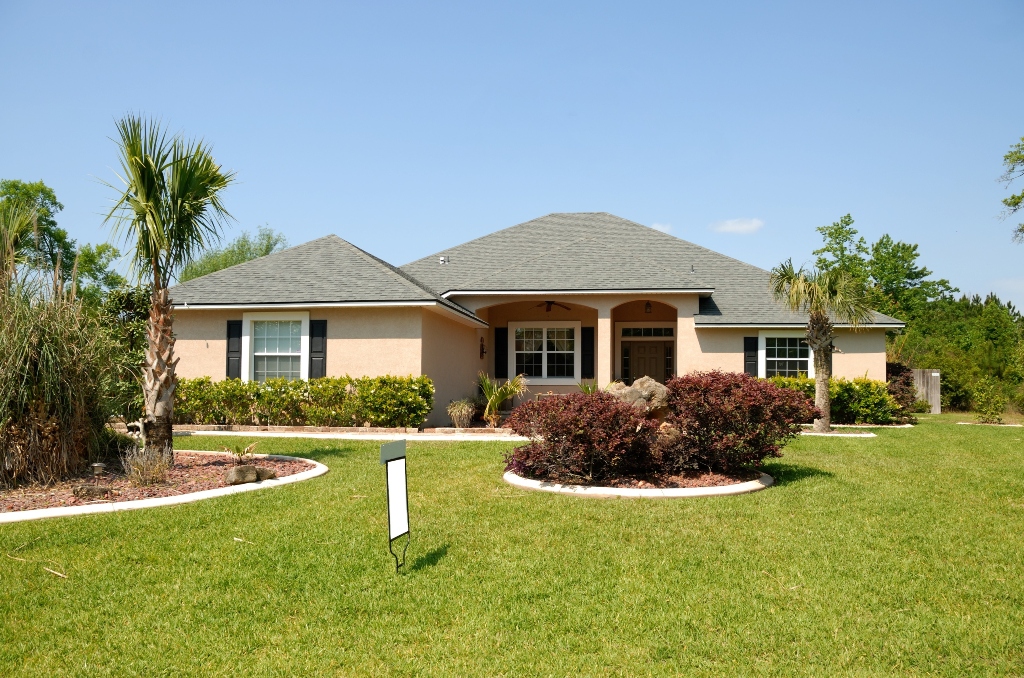
Florida housing market – Pictured: A home for sale in St. Augustine, Florida, USA. Photo: Paul Brennan/Shutterstock.com
With Florida leading the US in metro areas with the greatest drops in property prices, the US housing market is cooling along with the weather as we move into late November.
According to a recent research by the real estate analytics company Cotality, seven of the 100 largest metro areas in the US had the 10 coolest markets.
The 32,000-person community of Cape Coral, Florida, which is well-known for its picturesque canals, was notable for having the biggest year-over-year decline in home prices in September (7.1%), as well as the second-highest overall, after Champaign, Illinois.
Naples, Florida saw a 6.7% fall in home values, followed by Punta Gorda, Florida (-6.2%), Sebring, Florida (-5.2%), North Port, Florida (-5.1%), Brownsville, Florida (-4.8%), and Sebastian, Florida, which completed the top 10 with a 4.6% decline.
Interestingly, Kahului, Hawaii, and Wichita Falls, Texas, came in eighth and ninth, respectively.
Cara Ameer, a real estate broker at Coldwell Banker Vanguard Realty in Florida, tells Realtor.com®, “These towns are largely retirement and second-home places, so there is not much business or industry coming into these areas outside of tourism that generates jobs and keeps the economy going, so wages are lower and you don’t have people relocating to this area for jobs, hence less demand for buying as well as renting.”
“A drop in property values is the result of all of this.”
According to the most recent data available and examined by Realtor.com experts, the average single-family home in hard-hit Cape Coral sold for $350,000 in August, a decrease of over 7% from the previous year.
The median home sales price in Cape Coral has decreased by more than 13% when compared to August 2022 during the pandemic boom phase, when mortgage interest rates were close to all-time lows and demand skyrocketed.
In contrast, the average North Port property sold in August 2025 for 20% less than it did three years prior.
Cape Coral is still having difficulties.
Cape Coral’s declining trend has been fueled by a combination of local and national causes, as increased foreclosure rates, higher insurance premiums, and rising house finance have reduced buyer interest.
Because of its location on the Gulf Coast, the city is susceptible to flooding and hurricane damage, which makes obtaining property insurance more challenging and costly.
At 2.2%, Cape Coral actually has the third-highest premium-to-market ratio in the country.
This indicator shows how much a homeowner spends annually on insurance premiums in relation to the home’s market value.
For instance, a Cape Coral homeowner with a $350,000 house would need to budget $7,700 for their yearly insurance payment.
According to Ameer, even though Florida does not impose a state income tax, lower-income individuals typically do not save enough money to cover the growing expenses of property ownership in these coastal communities, which are beset by rising insurance premiums as well as increased HOA and condo dues.
“These kinds of shifts are causing Florida’s property values to become lopsided,” she says.
Separately, the Q3 2025 report from ATTOM, a curator of land, property, and real estate data, gave Cape Coral the unpleasant distinction of having the third-highest foreclosure rate out of 225 metros with a population of at least 200,000.
While the number of short sales and foreclosures in Cape Coral has increased from the previous year, Karen Borrelli, president of the Royal Palm Coast Realtor Association and agent at John R. Wood Christie’s International Real Estate, tells Realtor.com that the data does not indicate that there is “a disaster looming in front of us.”
However, when it comes to Florida’s troubled areas like Cape Coral, North Port, and Naples, these indicators don’t give the whole story. Real estate professionals and experts concur that overcorrection from the hot epidemic years is a major element driving down prices in those urban areas.
“Rapid price growth, combined with increasingly costly and difficult-to-obtain insurance, and rising mortgage rates, pushed many would-be buyers out of these Florida markets,” says Realtor.com senior economic research analyst Hannah Jones.
“Demand declined and prices started to correct as affordability worsened.”
In other words, many buyers were priced out when the market “went up too high, too fast,” as Borrelli puts it, and it will take some time for them to fully reappear.
Since 2022, prices in several Florida markets have been declining annually, indicating what Jones refers to as “rebalancing” as sellers look for a price point that will entice buyers back.
The analyst goes on to say, “This correction is likely to continue until demand strengthens enough to stabilize prices.”
Borrelli notes that the cooling in Cape Coral’s real estate market is restricted to home prices rather than sales volume.
She claims that “the buyers are still coming here.”They continue to make purchases. Year after year, our sales continue to grow at a nearly constant pace. The price is what’s cool. Additionally, it appears to draw in the same number of customers now that the prices are lower.
“It’s actually probably a really good time to buy,” Borrelli continues.
The agent claims that Cape Coral sellers continue to have “unrealistic” pricing expectations that date back to the intense COVID years.
According to Borrelli, “because the buyers are looking for value, those houses tend to sit.” “They can distinguish between a well-priced and an overpriced home.”
In response to slow buyer interest, sellers in Florida have taken a variety of actions: While some, especially in Miami, are opting to delist and wait for improved market conditions, others are making compromises.
About one-third of all for-sale homes in North Port, which Cotality ranked as the sixth-coolest market in the country, had price reductions in the spring. Cape Coral, with 28% of postings, came in second.
Borrelli says she thinks the local home market’s foundations are still solid and that prices will eventually stabilize.
“I believe we’re reaching a stage where our homes have value and people are recognizing that value,” she says. “And I see prices staying stable as long as that persists.”
Make sure you are staying up-to-date with the latest and most important Florida news with Florida Insider. Whether you are interested in business, education, government, history, sports, real estate, nature, weather, or travel: we have something for everyone. Follow along for the best stories in the Sunshine State.

Mike has more than 30 years of experience in marketing and public relations. He once owned his own agency and has worked with some of the largest brands in the world.
